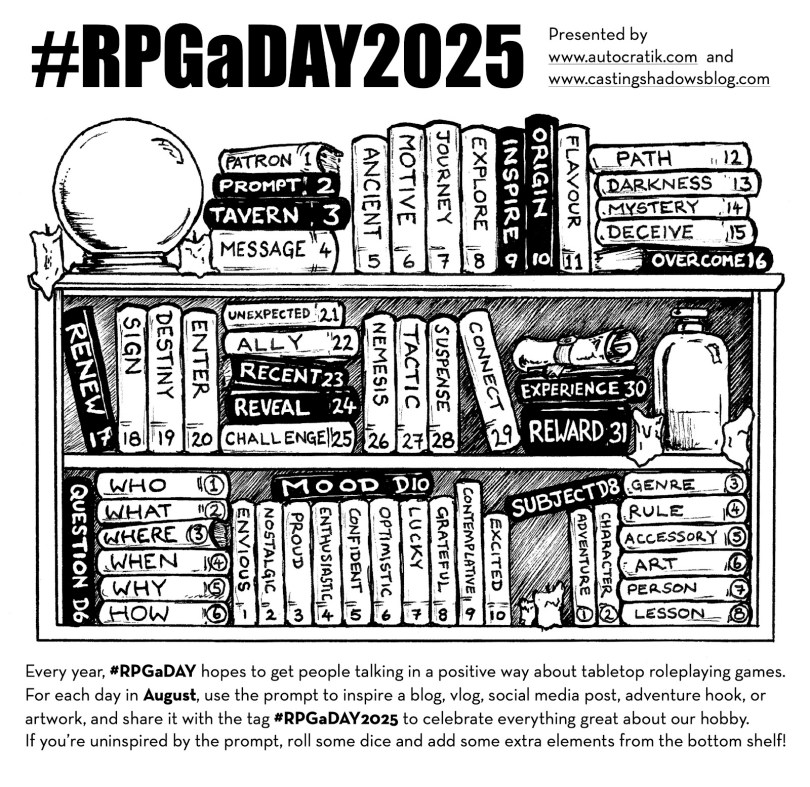
The reason that we act the way we do. In an RPG, motive is everything. Characters need them, villains need them, the adventure has them in a way, and even the players need to buy in to the game they’re playing.
I think a well-designed game keeps motive and motivations for the players and characters front and center. Games are often about something, have themes and motifs, and expect a certain buy-in from everyone. The best games, in my mind, know what they want to be, focus in on what the game is about, instead of pretending that they’re the best game that can do any- and everything.
Draw Steel, for example, builds character motivation directly into character creation. It’s a game about being heroes that fight monsters, and explicitly so. You choose a career for your character–the person they were before becoming a hero. That gives some character options, such as skills, but it also comes with an inciting incident that made you give up your life for that of a hero. Something was taken from you, something changed, and you can’t go back. Choosing (or rolling on) these inciting incidents lays out a clear heroic motive for your character, which is grounded in where you came from. Be it fame and fortune, revenge, or a sense of duty, you have a strong sense of who your character is, and why they do what they do. Why they buy into the setting’s explicit focus of fighting monsters.
The motives of an antagonist or villain are just as important. Far as they are concerned, they are the protagonist, and often the hero, of their own story. Even if they know that their actions are evil, they still have a clear motivation to justify the malice of their actions to themselves. Motives help inform the group of what the antagonist would do next, how they react to the actions of the player characters.
RPG narratives are inherently fluid and dynamic, always changing as the players make choices the GM (often) didn’t think of at first. Clear motives during unexpected moments, whether those of the characters or the people around them, help tremendously to create interesting and tense stories, and keep the game moving.
More than that, clear motives are just as important for the people behind the characters. Understanding and agreeing on the motives for why players want to play, why GMs want to run–why we’re even here and what we want out of a game–can make for a healthier, more holistic experience for everyone involved.
Discover more from Behind The Wall
Subscribe to get the latest posts sent to your email.
 Behind The Wall