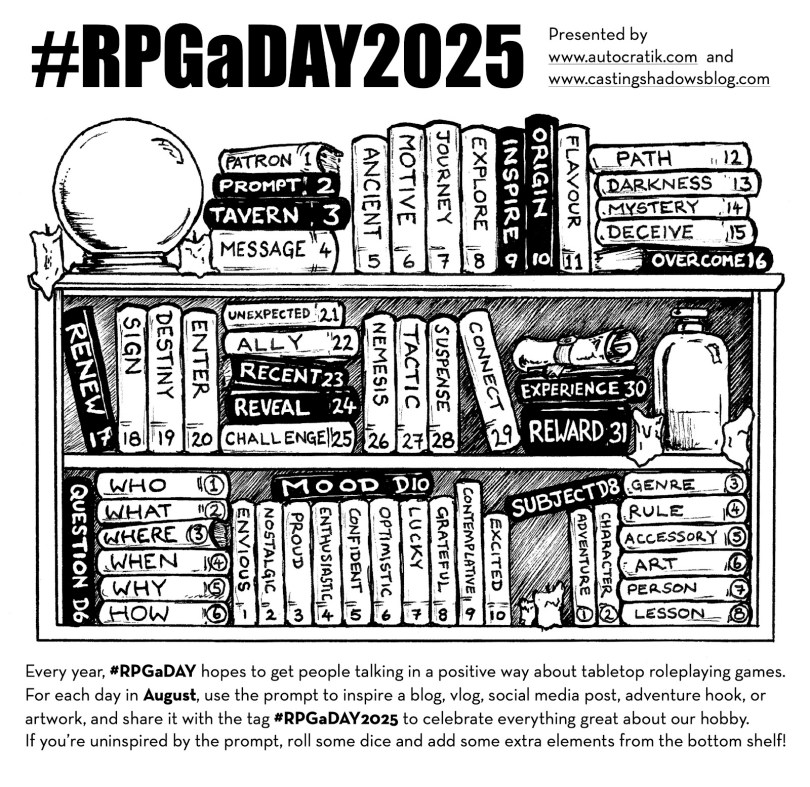
Let’s chat about complexity in role-playing games.
A new game can be daunting. Complex, obtuse, confusing even. Rulebooks aren’t meant to be read from start to finish in page order–you must flip back and forth to get the information you seek, to reference and understand. Even if an author goes hard on their layout and sidebars and callouts, no rulebook is a straightforward affair. Combat rules refer back to basic rules, class options mention conditions, spells or perks or titles or effects call back to specific entries in other chapters. It’s just the nature of the hobby.
But it’s worth sticking with it. Rulebooks, like any other book, tell a story. They evoke ideas and concepts, excite and inspire. Triangle Agency is an actual field manual for the players/agents, and it treats the reader as such. Mörg Börk transitions from a few pages of lore straight into character creation without so much as a chapter change. Spire has bits and scraps of lore sprinkled into every entry across the book, slowly but surely creating an abstract painting of a bizarre fantasy world as you grapple with the systems and options.
They can also be dense and dry and not at all any of the things I just said. Draw Steel is practical and efficient when it presents its rules through its clean, boardgame-esque layout. It’s not ugly or even boring by any means, it’s clean and focused. It’s 400 pages of rules and lore and player options and GM advice, and it can be quite a lot.
Both of these style can be challenging to overcome. These narrative games sometimes make it hard to figure out how to actually play the game. Yeah, they have strong vibes and evocative layout, but where’s the actual game here? The tactical descendants of skirmish games feel like you reading an instruction manual for fixing a modern car. It all makes sense, but only if you already know all the other parts.
Especially if you’ve ever only played one game–one that isn’t even all that great in either aspect–breaking into a brand-new game can be daunting. New terms, different styles and presentations, and this nagging feeling that the game you know was hard and complex to learn, so this must be the same.
Do it, though. Read it. Follow the steps to make a character. Read the GM advance for the first game. Hell, if there’s a starter set, use it. New games are always a good idea if you enjoy this hobby at all. Even if you keep returning to your safe game, the things you learn from the other systems will stick with you. Overcoming these challenges can and will make you a better player, a better GM, and gives you a greater appreciation for the hobby in general.
Perspective, inspiration, excitement. That’s what waits on the other side of that complex rule-tome or esoteric vibe-check. Overcome your own reservation, and fall in love with the new and the weird.
Discover more from Behind The Wall
Subscribe to get the latest posts sent to your email.
 Behind The Wall