What follows is a non-exhaustive list of TTRPG I absolutely adore, fully recommend, or I’m excited to get my hands on once they are fully released. The list is in no particular order and I have played/run every game on it at least a few times.
This is not meant to be a deep dive into each title, but merely an overview. I’ll dig into them at some point in future one by one (and add links here to those posts once they are up).
Draw Steel

Tactical. Heroic. Cinematic. Fantasy.
These are the design pillars of Draw Steel, the brand new flagship title by MCDM.
I’ve been following the development of Draw Steel since the early days–really, I followed the game director’s youtube channel since way before then. And my group and I have been playing it since the “complete” playtest of the entire game dropped for their patrons late 2024.
It’s a game of heroes fighting monsters and it knows that that’s what it is. It’s not trying to be everything, and instead focuses on offering immersive, tense, exciting tactical grid combat. And despite that, the game offers robust rules for montage tests (think: skill challenges), and even negotiations with important NPC. That, together with their in depth downtime rules, character creation that creates actual three dimensional characters, list of treasure, fun complications, and minor perks, Draw Steel is probably the best offering of this type of game I have ever played.
Both Matt Colville (Game Director) and James Introcaso (Lead Designer) stream regularly, talking about Draw Steel and other MCDM (or non MCDM) related projects.
- MCDM’s youtube: https://www.youtube.com/@helloMCDM
- Matt Colville’s Twitch https://www.twitch.tv/matthew_colville
- James Introcaso’s Twitch https://www.twitch.tv/jamesintrocaso
Ironsworn/Starforged
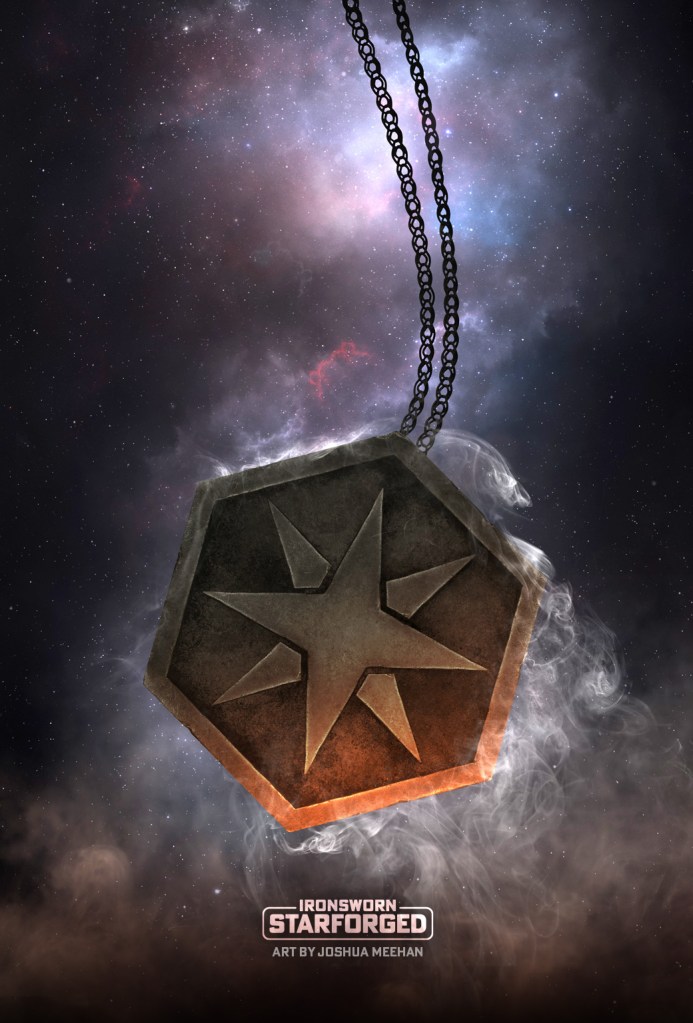
I’ve written a big overview of this game already: Ironsworn: Starforged
Both Ironsworn and it’s later sci-fi iteration Starforged are amazing solo or co-op TTRPG with innovative rules, invocative tables to create a living, breathing world, and an all-around near-perfect story engine disguised as a game.
One highlight of the game I want to mention here are the challenge dice. Whenever you have to make a roll as part of a move (the game is based on Apocalypse World but has pushed that engine quite a bit ahead), you roll a d6 and add some static bonus to it. But you also roll two d10 as challenge dice to simulate the difficulty of the task ahead. If your d6+ exceeds both d10, you get a Strong Hit, if only exceeds one of them it’s a Weak Hit, otherwise it’s a Miss. The thing I like about that is that the difficulty is determined randomly as much as the action’s success. This alone can inform you so much about the story: maybe a low roll on the challenge dice while trying to convince a guard to let you through means that the guard doesn’t really care about their job is has other things on their mind, while a high roll would suggest that they’re tough to convince or loyal to whoever they work for. Instead flavor added to a scene. Love it.
Check out Tomkin Press to find more of Shawn’s creations: https://tomkinpress.com/
Blades in the Dark

In John Harper’s Blades in the Dark, the players take on the roles of a crew of daring scoundrels in a pressure cooker of a city that is cut off from the rest of the world due to a cataclysmic event. Duskvol is a city ridden with, and ruled by organized crime, and the players’ crew wants to get a big, fat slice of that pie.
The gameplay of Blades in the Dark is, in one word, genius. The crew takes on scores to steal, murder, escort, infiltrate various targets in the city. But instead of spending an entire sessions planning every detail of the heist, the crew instead jumps straight into the action with only two important details: what’s the target/job, and where do we start? After that, a simple roll of the dice moves the story right to score. Any other details that could be considered “planning” or “foresight” are instead handled by the players creating Flashback scenes that highlight how they would have prepared themselves for the challenges ahead as they come up. It’s a bit more involved than that, but you get the idea. Classic Oceans 11 shenanigans, where everything goes according to plan, and the plan’s being cooked up during flashbacks when it matters.
Outside of the score, the city doesn’t sleep. The crew has to manage heat, stress, the favor or anger of rival factions, and various other projects as they lay low with their ill-begotten gains from the last job and prepare for what’s next.
The setting, two, is invocative and dripping with style. Victorian aesthetic, filled with ghosts and guns and dark alleys.
Fiasco
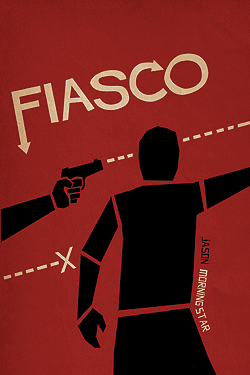
Fiasco by Bully Pulpit Games is a GM-less story game with some light rules but a lot of style. It’s a game of people with high ambitions and poor impulse control. Like a Coen Brothers movie, the players take on roles of characters that are defined by their relationships to each other, and special details like important objects, locations, or events.
From there, it’s really just improv story telling for half the game, where the characters try to fulfill their desires and get what they want. Then, a big twist is introduced as part of the game, and the second half of the game sees the characters trying to make it out alive of whatever disaster they find themselves in. The game concludes an aftermath section where most characters won’t make it out all too well, and some fates are worse than death.
It’s a game about being a bad, bad person. Even if you’re trying to do good, things will turn sour quickly for you. It’s a fun game for an afternoon, all sessions being one-and-done games. Works well with three players and is easy to pick up.
Spectaculars
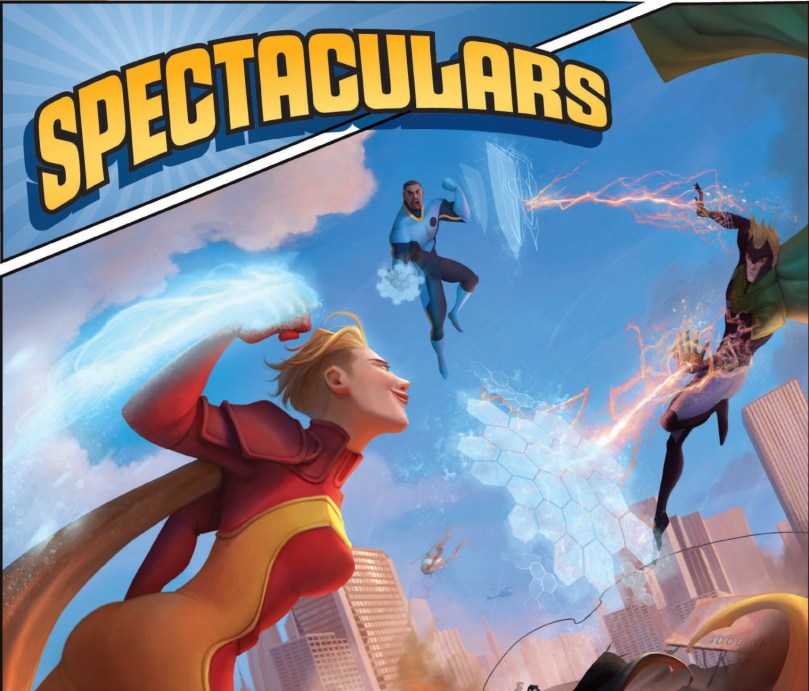
Scratchpad Publishing‘s Spectaculars is one of my top 3 games of all times. It’s a superhero game, sure, but it’s so much more than that.
In Spectaculars, you create your own comic book superhero universe with the help of the game’s Setting book. Everyone at the table will fill out setting elements (there are over 30 of them) the first time they become important in the game, voting on and discussing tone, themes, details of each element together.
Combined with an a massive amount of premade issues (adventures) set in the four comic book genres (Street level, super science, galactic, supernatural), Spectaculars is an extremely well written game that guides the group through creating their own comic book setting one issue at a time.
My favorite thing about Spectaculars is how it focuses on the drama of the genre. It’s not about super power heroes punching bad guys, calculating power levels and crunch their stats. Instead it focuses on the cinematic aspects of the heroes, their powers, their secret identities and personal ambitions and turmoil. It’s a fiction first game, even in it’s turn-based combat scene. And between the fights, the players have the power to create Interlude scenes–like writing their own panels in a comic–and it’s the GM’s job to enable them as much as possible and to introduce challenges into the scenes the players create.
In Spectaculars, everyone is the author of the story as it unfolds. My time with the game has been unforgettable, and the friends I first met through it are still with me today, playing games and having fun.
Spire & Heart
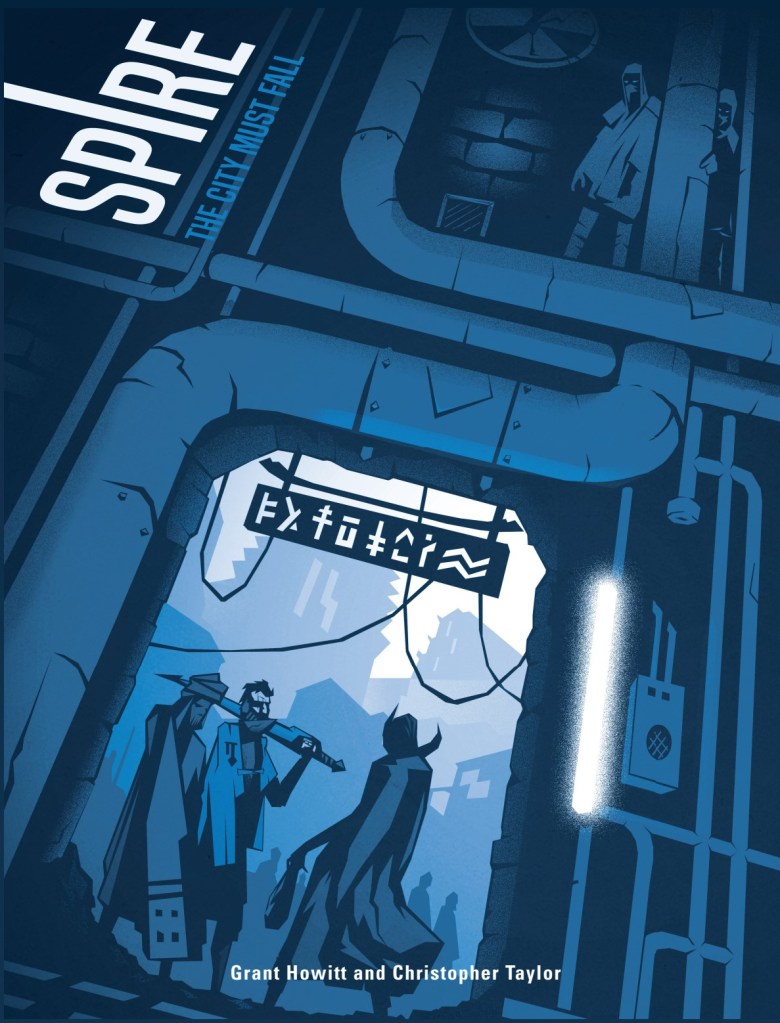
Both games are from Rowan, Rook &Decard, using largely the same Resistance rule system.
Spire is a game about class warfare, apartheid, rebellion, and oppression.
Heart, on the other hand, is a game about doing whatever it takes to answer the call of your deepest desires. A game about death and legacy.
Both games are set in the same world, with Spire being a literal city inside of an impossible Spire where the oppressed Dark Elves trying to stick it to their Aelfir (High Elf) overlords. it’s an impossible mission, but the alternative is eternal subjugation. Heart, then, is beneath Spire. A large, ever-shifting dungeon, that lures people down into its depth to use their dreams and desire in an effort to grow, change, learn. Heart is a tear in reality itself, and it wants to become… it just wants to become. Cosmic/body/spiritual horror abound.
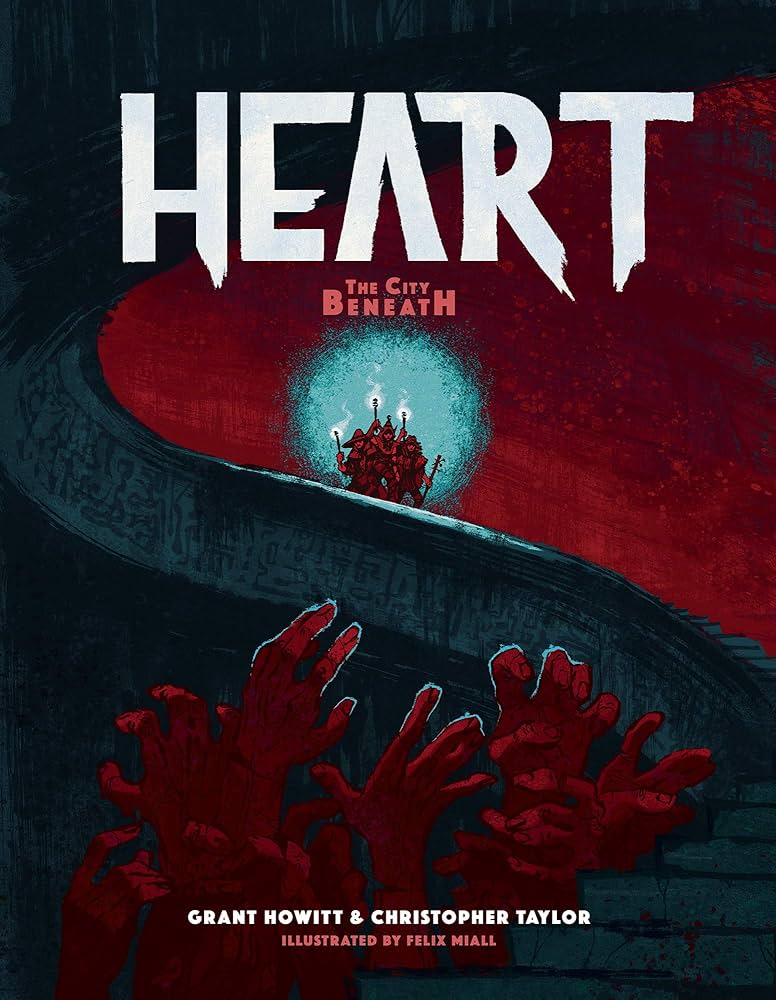
The Resistance system used in both games is a narrative tool to turn abstract Stress from individual actions into concrete Fallout that can change your character forever. It’s a powerful story tool and never, ever leads to anything good. But there is excitement in tragedy and failure, seeing your characters becoming more and more unstable, until something’s gotta give.
Characters also have access to powerful abilities that can alter the story itself in meaningful ways. The game is trying to destroy your characters at every turn, but you have tools to stick right back to the game.
Honorable Mentions
There a few games I like to mention, though I don’t have much to say about them at this point. Either, I haven’t played them enough to have a fully formed opinion on them, or they’re not released yet. I’ll update the titles as things change in these regards.
Triangle Agency
SCP foundation meets X-Files meets Laundry files. Triangle Agency is a weird game with weird rules and weird style and I’m here for it. You are part of The Agency and your job is to capture anomalies before they tear apart reality. Don’t forget to fill out the paperwork and hope that your personal problems don’t interfere with the mission.
I only played a few games so far, and never ran it. But I’m already in love with it.
Hollows
Rowan, Rook &Decard‘s Hollows promises to be a game that captures the vibes and feels of a Soul-like game, innovative tactical combat and all. It’s dark and moody and a bit depressing, but the early playtest I played a while back had me hooked. I suggest keeping an eye out on Hollows if you like games that dig into trauma and darkness.
Neon City Outlaws
Neon City Outlaws is the newest offering by Scratchpad Publishing. It’s their cyberpunk take on their previous game, Dusk City Outlaws. Never got around to playing that one, but based on their kickstarter, Neon City Outlaws promises to take a lot of the things they learned from Spectaculars to improve the formula of Dusk.
 Behind The Wall